El término “modular” se usa a menudo indistintamente con el término “prefabricado”, cuando en realidad existen varios métodos de prefabricación. En Turkel Design, nuestras viviendas emplean un sistema de prefabricación con paneles; si bien los componentes de la construcción se fabrican fuera del lugar de obra, no se trata de viviendas modulares.
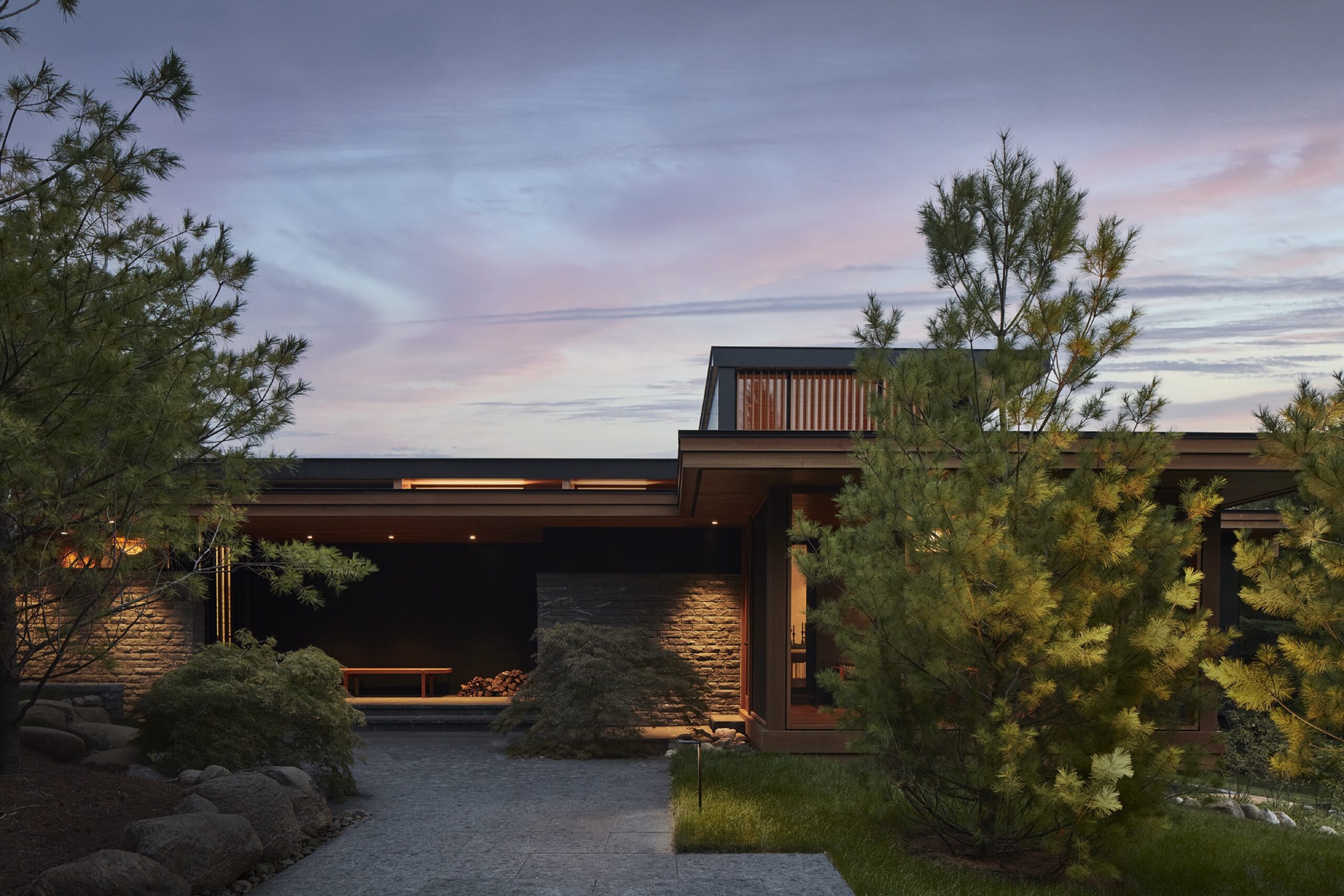
Tanto en la prefabricación modular como en la de paneles, gran parte de la vivienda se construye en una planta especializada. En la construcción modular, secciones enteras de la casa se construyen como grandes volúmenes, ya sea parcial o totalmente terminados. Posteriormente, se transportan en camiones hasta el lugar de construcción y se colocan sobre una cimentación prefabricada.
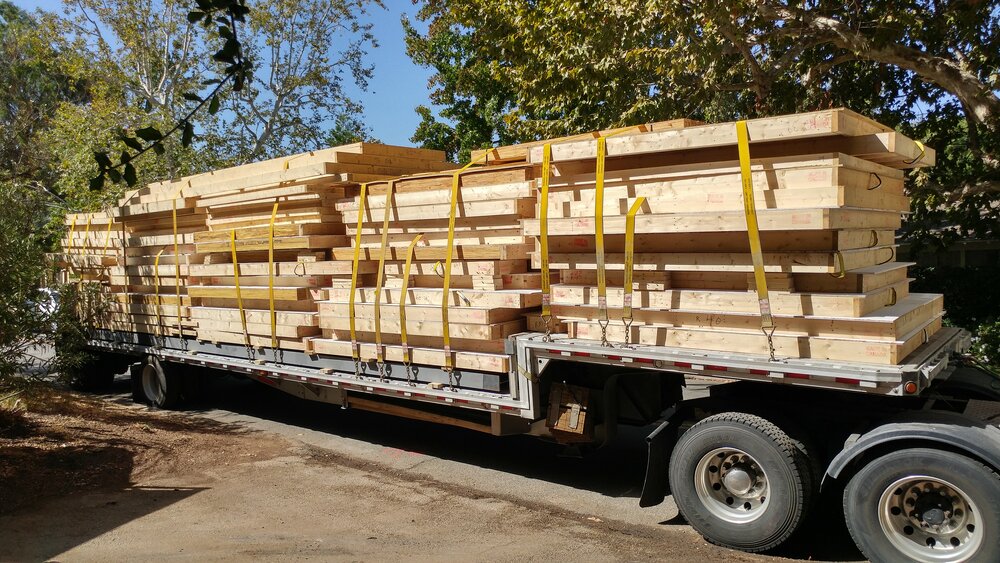
En la construcción con paneles prefabricados, las paredes exteriores e interiores de la casa también se construyen previamente, pero en este caso se componen de una serie de paneles planos. Estos paneles se pueden transportar en un camión de plataforma convencional y luego ensamblarse en el lugar de construcción sobre una cimentación ya preparada.
¿Por qué prefabricar en absoluto?
Tanto la construcción modular como la prefabricada abordan los problemas que presenta la construcción convencional tradicional. Es difícil construir con precisión cuando hay que medir, cortar y clavar cada pieza de la casa en el lugar de construcción. Construir de esta manera también puede llevar mucho tiempo. Además, si se busca un acabado de alta calidad, esto podría requerir un nivel de experiencia en construcción que no está disponible, o no es económicamente viable, en todas las localidades. La prefabricación puede ser más precisa, más rápida y ofrecer un producto superior, pero lo más importante es que proporciona previsibilidad.
¿Por qué utilizamos paneles prefabricados?
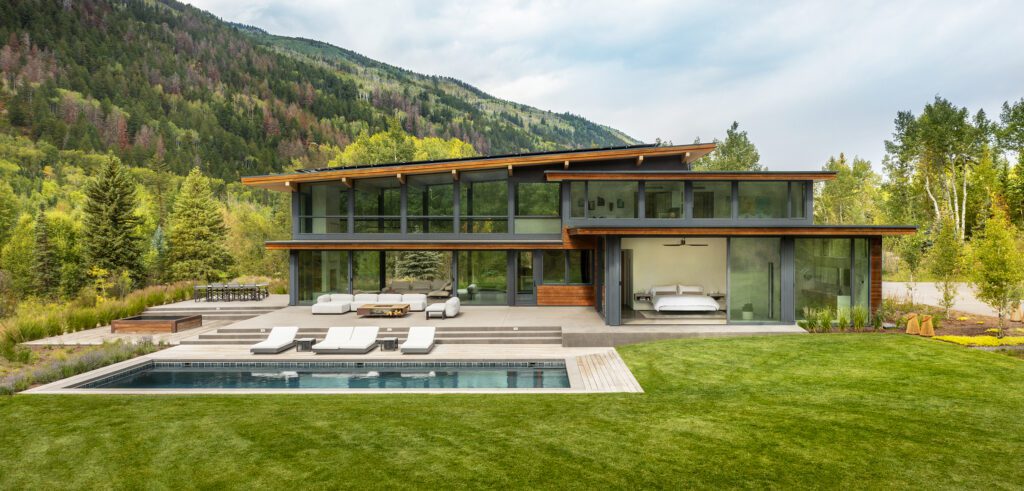
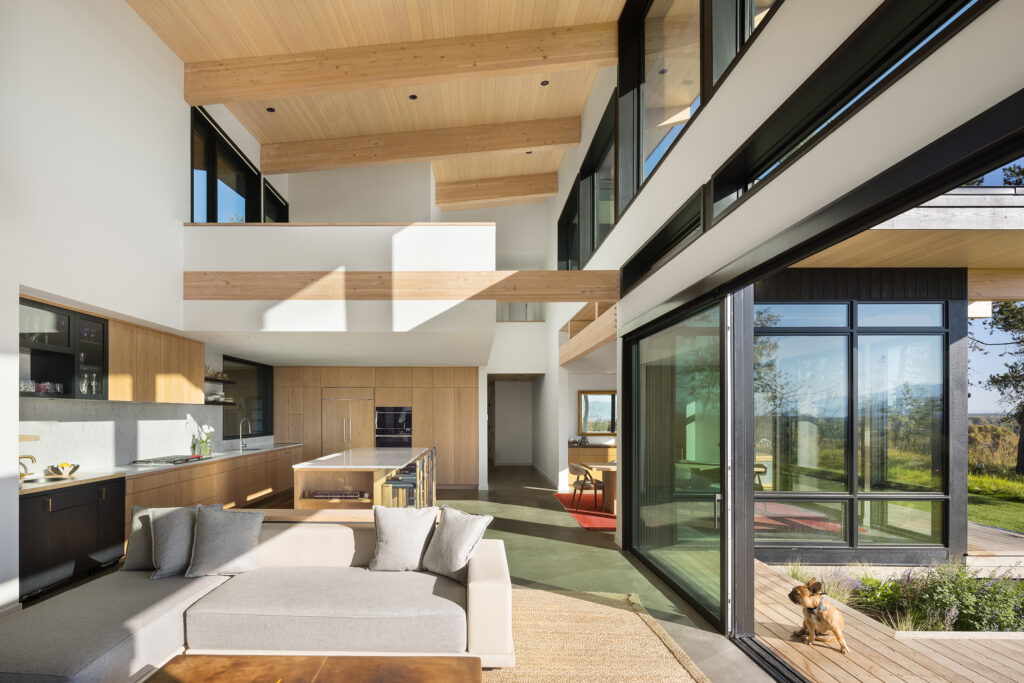
La prefabricación con paneles permite una gran variedad espacial, lo que brinda a nuestras viviendas un nivel de personalización que no suele asociarse con la construcción prefabricada. La construcción modular dificulta lograr esta variedad de manera eficiente.
Los módulos de ancho fijo suelen ser demasiado grandes para un espacio íntimo y demasiado pequeños para uno amplio. Un módulo de vivienda, transportado en camión, no puede ser más alto que el paso elevado de autopista más bajo por debajo del cual deba pasar.
Una opción más eficiente
Cuando una casa prefabricada se transporta en camiones a la obra en paneles, estos se pueden apilar uno sobre otro en el camión (en un paquete plano), lo que permite entregar una gran cantidad de material en cada envío. Con un módulo, se transporta un gran volumen de aire por carretera. Los paneles son una forma más eficiente de transportar una casa prefabricada.
Su hogar Turkel Design se puede construir prácticamente en cualquier lugar
Una de las ventajas que ofrecemos en Turkel Design es nuestra capacidad para diseñar casas para prácticamente en cualquier lugarEn ciudades y suburbios, en terrenos cercanos a la ciudad o en zonas remotas, y en lugares cercanos y lejanos. El gran tamaño de los módulos de vivienda impide su transporte por las carreteras estrechas o empinadas que conducen a sitios remotos. Además, los módulos son susceptibles a sufrir daños si se transportan a largas distancias, debido al viento, la lluvia y las vibraciones de la carretera. Los paneles evitan ambos problemas.
Su hogar puede ser inspeccionado adecuadamente
Los paneles evitan otro problema: algunas localidades se resisten a los módulos por diversas razones. Entre ellas, los módulos suelen llegar con la estructura, el cableado y la plomería ocultos tras paneles de yeso, donde las autoridades de construcción no pueden inspeccionarlos. Las paredes de nuestras casas paneladas llegan descubiertas, lo que permite inspeccionar la estructura y los diversos sistemas durante la instalación. Las casas prefabricadas paneladas le permiten construir su casa en cualquier terreno que se ajuste a sus sueños.
Para obtener más información sobre cómo brindamos una calidad y personalización sin precedentes a la arquitectura de casas prefabricadas, visite nuestra página Proceso sección.


 English
  Français
  한국어
한국어  Español
  简体中文
简体中文